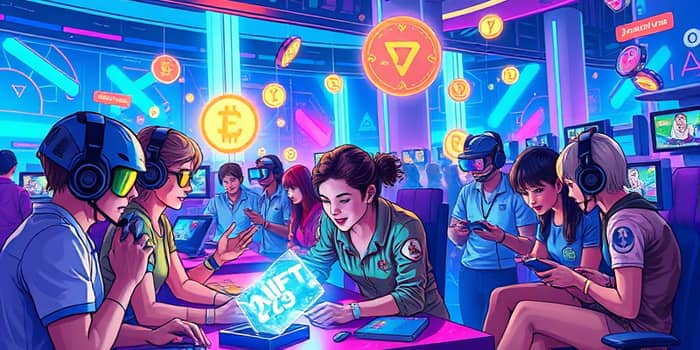
The digital world is undergoing a seismic shift, where entertainment and finance converge to create unprecedented opportunities. GameFi revolutionizes gaming by empowering players with real economic rewards, transforming hobbies into potential income streams.
This innovative blend of blockchain technology and decentralized finance invites everyone to participate in a new era of digital ownership. Play-to-earn models challenge traditional paradigms, offering a glimpse into a future where skill and time translate into tangible value.
As we explore this dynamic ecosystem, it's clear that GameFi is more than just a trend—it's a movement reshaping how we interact with virtual worlds. Tokenomics and NFTs redefine asset ownership, making every in-game achievement a step toward financial autonomy.
Understanding GameFi: Beyond Traditional Gaming
GameFi stands at the intersection of gaming and decentralized finance, leveraging blockchain to enable verifiable digital ownership. Unlike traditional pay-to-play models, it ensures that players retain control over their assets.
This fusion creates a sustainable economy where entertainment and monetization coexist. Players can trade characters, skins, and items on open marketplaces, fostering a community-driven environment.
The core difference lies in blockchain-enabled property rights, which eliminate reliance on central authorities. This shift empowers individuals, especially in developing regions, to access new economic avenues.
The Play-to-Earn Revolution
Play-to-earn mechanics have disrupted the gaming industry by rewarding players for their engagement. From daily missions to competitive battles, every action can yield cryptocurrency or NFTs.
Active income streams involve tasks like combat or quests, while passive opportunities include staking tokens or lending assets. For instance, Axie Infinity popularized the scholarship system, where owners share profits with players.
Key P2E models include:
- Missions and battles for direct rewards.
- Staking resources for passive income.
- Governance participation via DAO tokens.
- Trading NFTs on decentralized exchanges.
- Community-driven events and competitions.
This evolution from play-to-win emphasizes fairness and long-term value creation. Games like Axie Infinity have demonstrated massive success, with over $3.8 billion in NFT sales in 2021 alone.
Digital Ownership and Tokenomics
NFTs serve as the backbone of GameFi, representing unique in-game assets that players truly own. These digital items can be minted, traded, or sold, providing full monetization potential.
Tokenomics is crucial for sustainability, as it dictates how rewards are distributed and maintained. Weak token designs can lead to economic collapse, highlighting the need for dynamic systems.
Essentials for success include:
- Balanced reward mechanisms to prevent inflation.
- Integration with crypto wallets like MetaMask.
- Clear governance structures for community input.
- Regular updates to keep gameplay engaging.
- Scalability solutions to reduce transaction costs.
By focusing on verifiable asset ownership, GameFi builds trust and encourages long-term participation. Visual cosmetics may not impact earnings directly, but strategic resources play a key role in profitability.
Spotlight on Leading GameFi Projects
The GameFi landscape is rich with diverse titles, from casual minigames to complex metaverses. Top projects in 2025-2026 showcase the innovation driving this sector forward.
Forgotten Playland on Avalanche offers nostalgic fun, while Wildcard on Arbitrum blends strategy with collectible cards. Mobile games like Pudgy Party bring party-style excitement to the blockchain.
Here are some standout examples:
- Forgotten Playland: Casual minigames with a Toy Story aesthetic.
- Wildcard: A 2v2 MOBA with deep strategic elements.
- Pudgy Party: A mobile party game featuring penguins.
- Super Champs: A battle royale enhanced by AI.
- Hytopia: A creative platform similar to Minecraft.
These projects highlight the versatility of blockchain gaming, catering to various player preferences. From casual enjoyment to competitive esports, there's something for everyone.
The Crypto Economy in Gaming: Opportunities and Challenges
GameFi presents immense opportunities for financial inclusion and community engagement. Players can earn real income while enjoying immersive experiences, democratizing access to wealth.
Advantages include:
- True digital ownership of assets.
- Potential for return on investment through gameplay.
- Gamification as a tool for blockchain adoption.
- Community-driven governance via DAOs.
- Innovative monetization beyond traditional models.
However, challenges persist, such as:
- Weak gameplay leading to low retention.
- Speculative bubbles that undermine sustainability.
- High transaction fees on some networks.
- Need for balanced tokenomics to avoid collapse.
- Regulatory uncertainties in various regions.
Addressing these issues requires dynamic economic models and a focus on fun. Scalability solutions, like sidechains, are essential to reduce costs and improve user experience.
Future Trends and Predictions for 2026
The GameFi sector is poised for significant growth, driven by technological advancements and increasing adoption. Predictions for 2026 suggest a shift toward more sustainable and entertaining games.
Key trends include:
- Integration of AI for generative content and dynamic tokenomics.
- Convergence with meme coins and mine-to-earn models.
- Entry of traditional gaming studios into the blockchain space.
- Focus on community-driven development and governance.
- Expansion into metaverse applications beyond gaming.
As blockchain technology matures, GameFi could become a mainstream gateway to web3. This evolution promises a future where digital entertainment is both rewarding and equitable.
Practical Guide to Getting Started with GameFi
Embarking on your GameFi journey is easier than you might think. With a few simple steps, you can dive into this exciting world and start earning.
First, set up a crypto wallet like MetaMask to manage your assets securely. Connect it to a blockchain network, such as Ethereum or Arbitrum, depending on the game.
Next, research projects carefully to avoid scams and volatility. Look for games with active communities and transparent tokenomics.
Here’s a basic checklist:
- Choose a reputable GameFi project aligned with your interests.
- Acquire necessary cryptocurrencies for initial investments.
- Participate in tutorials or guilds for guidance.
- Start with small engagements to learn the mechanics.
- Monitor market trends and adjust strategies accordingly.
By taking these steps, you can mitigate risks and maximize your potential earnings. Remember, patience and education are key to success in this dynamic field.
GameFi is not just about making money; it's about building a future where creativity and commerce thrive together. Embrace the play-to-earn revolution and become part of a global community redefining digital value.
Referencias
- https://www.latamblocks.com/news/gaming-y-web3-que-deparara-el-2026-para-el-gamefi
- https://www.binance.com/es/academy/articles/what-is-gamefi-and-how-does-it-work
- https://observatorioblockchain.com/blockchain/que-es-gamefi-la-moda-de-ganar-dinero-por-jugar-con-juegos-digitales/
- https://www.antiersolutions.com/es/blogs/C%C3%B3mo-GameFi-est%C3%A1-revolucionando-el-futuro-de-los-modelos-P2E-de-juego-para-ganar-en-2024/
- https://icobench.com/es/news/la-convergencia-entre-gamefi-y-meme-coins-podria-arrancar-el-modelo-mine-to-earn/
- https://web3.gate.com/es/crypto-wiki/article/promising-gamefi-tokens-offering-exciting-gaming-rewards-20251226
- https://margex.com/es/blog/principales-tendencias-cripto-y-nuevos-proyectos-a-seguir-en-2026/
- https://gam3s.gg/es/news/que-es-gamefi/
- https://spanish.entrepreneur.com/tecnologia/gamefi-la-revolucion-de-los-videojuegos-en-la-era-de-web3/481709