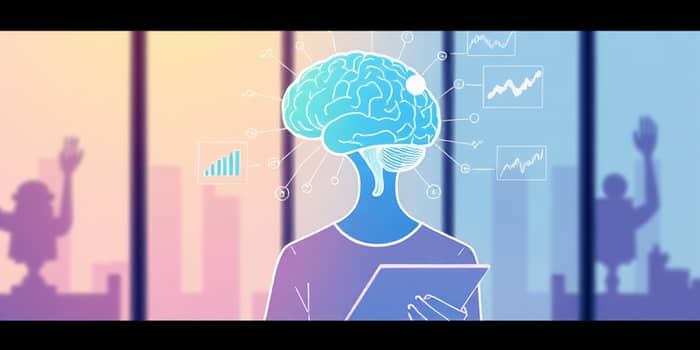
In today's fast-paced financial world, understanding the human mind is key to making smarter investment decisions.
Neurofinance bridges neuroscience, psychology, and finance to reveal how our brains process risk, reward, and uncertainty.
This interdisciplinary field offers practical insights that can transform how we invest, helping us overcome instinctual biases and leverage technology for better outcomes.
By exploring the neural mechanisms behind financial choices, we can unlock strategies to enhance rationality and achieve long-term success.
What Are Neurofinances?
Neurofinance is an emerging discipline that integrates finance, neuroscience, and psychology to analyze how the brain makes financial decisions.
It evolved from behavioral finance in the 1990s, which first acknowledged that humans are not always rational maximizers of utility.
Unlike traditional models, neurofinance uses advanced techniques like fMRI and EEG to map brain activity in real-time.
This allows researchers to observe neural responses to financial stimuli, such as gains and losses.
Key goals include identifying mechanisms related to risk, reward, and impulsivity, and predicting market behaviors.
By studying the brain in action, neurofinance provides a deeper understanding of investor psychology beyond surface-level behaviors.
The Brain's Dual Systems in Financial Decisions
Our brain operates using two systems, as proposed by Daniel Kahneman: System 1 and System 2.
System 1 is fast, emotional, and intuitive, often leading to hasty judgments in investing.
System 2 is slow, logical, and deliberate, essential for complex financial analyses.
Neurofinance studies show that specific brain regions activate during financial tasks.
For example, the nucleus accumbens lights up with expectations of gain, while the insula responds to losses.
This neural mapping helps explain why emotions often override logic in high-stakes situations.
Understanding these systems can guide investors toward more balanced decision-making.
Key Cognitive Biases in Investors
Neurofinance has identified several biases that commonly affect investors, rooted in brain function.
- Loss aversion: The pain of a loss is neurologically stronger than the pleasure of an equivalent gain.
- Anchoring: Fixating on irrelevant reference points delays judgment updates.
- Overconfidence: Overestimating one's control and skills in volatile markets.
- Hyperbolic discounting: Preferring immediate rewards over future benefits, harming long-term savings.
Other biases include increased risk-taking after initial gains and regret-driven actions like premature selling.
Recognizing these biases is the first step toward mitigating their impact on investment portfolios.
The Role of Technology in Neurofinance
Technology serves as both a challenge and an ally in the realm of neurofinance.
On one hand, apps and algorithms can exploit cognitive biases, leading to impulsive trading.
On the other, tech tools can help manage emotions and enhance rationality.
- Neuroimaging and neurofeedback train self-control, reducing panic during market downturns.
- AI and apps analyze sentiment in portfolios, offering personalized recommendations.
- Automatic rules for buying and selling prevent emotional decisions.
- Experimental labs simulate financial tasks to study decision-making under pressure.
Technology enables real-time monitoring of investor behavior, fostering environments that promote rational choices.
Scientific Evidence and Groundbreaking Studies
Numerous studies provide empirical support for neurofinance principles, using advanced methodologies.
These findings underscore the scientific rigor behind neurofinance, validating its applications in real-world investing.
Practical Applications for Modern Investors
Neurofinance offers actionable strategies to improve investment outcomes, leveraging both insight and technology.
- Monitor emotions using sentiment analysis apps to avoid impulsive trades.
- Engage in neurofeedback sessions to train impulse control and reduce anxiety.
- Set automatic buy-sell rules based on predefined criteria, not market fluctuations.
- Use AI-driven tools for personalized investment plans aligned with risk profiles.
- Implement regular reminders to counteract hyperbolic discounting and promote long-term thinking.
These tools empower investors to make data-driven decisions, enhancing portfolio performance over time.
Historical Context and Evolution
Neurofinance has roots in earlier financial theories, evolving with advancements in science and technology.
- Classical finance assumed total rationality but failed to explain market bubbles and panics.
- Behavioral finance emerged in the 1990s, incorporating psychological insights into financial models.
- Neurofinance gained traction in the 2000s, enabled by breakthroughs in neuroscience imaging.
- Related fields like neuroeconomics broaden the study to general monetary decisions.
This evolution highlights how understanding the human brain is crucial for refining financial theories.
Future Directions and Conclusion
The future of neurofinance is promising, with potential integrations into everyday investing and technology.
- Explore cultural and familial influences on financial decision-making to tailor strategies.
- Develop real-time processing tools for traders in fast-paced environments.
- Create bias-proof portfolios using AI that adapts to individual neural patterns.
- Foster environmental cues that enhance rationality, such as simplified interfaces and educational prompts.
By embracing neurofinance principles, investors can navigate uncertainty with greater confidence and success.
As Warren Buffett noted, emotional control often outweighs IQ in achieving investment goals.
Neurofinance provides the framework to cultivate this control, transforming how we approach wealth management.
Referencias
- https://alcancemas.org/p/neurofinanzas-y-tecnologia-entendiendo-tus-decisiones-economicas/
- https://neuromarketing.la/2017/01/neurofinanzas-invertir-mejor/
- https://www.fundssociety.com/es/formate-a-fondo/neurofinanzas-como-toma-cerebro-decisiones-financieras/
- https://www.youtube.com/watch?v=t4Ke2KDgYXc
- https://ineurociencias.org/behavioral-economics-neuroscience/
- https://www.larazon.es/economia/20200301/jpjhzh2wtbe6vhpimrzhl6kxmu.html
- https://revistas.uniminuto.edu/index.php/Pers/article/view/2405/2444