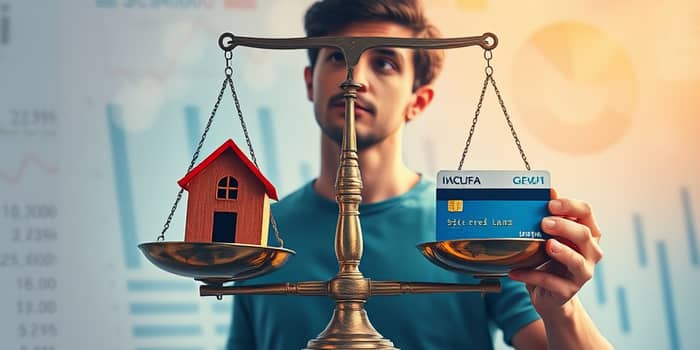
Navigating the world of loans can be overwhelming, especially when faced with the choice between secured and unsecured options.
Your financial future hinges on this decision, making it crucial to understand the nuances.
This guide will empower you with knowledge, helping you steer clear of pitfalls and toward prosperity.
Understanding the Basics: What Are Secured and Unsecured Loans?
A secured loan requires you to pledge an asset as collateral, such as your home, car, or savings account.
This collateral acts as a safety net for lenders, reducing their risk if you default.
In contrast, an unsecured loan does not require any asset backing; it relies solely on your credit history and income.
No collateral is needed for unsecured loans, but this comes with higher lender risk.
Both types are common in personal and business financing, but their implications vary widely.
Knowing these definitions is the first step toward making a smart financial move.
Key Differences at a Glance: A Detailed Comparison
To help you visualize the core distinctions, here is a comprehensive table based on reliable data.
This table highlights how secured loans offer more favorable terms but come with greater personal risk.
Unsecured loans, while faster to obtain, often carry steeper costs and limitations.
Understanding these differences can prevent costly mistakes and align your choice with your financial goals.
Real-World Examples: Where Each Loan Type Shines
Secured loans are ideal for significant investments that require substantial funding.
- Mortgages, using your home as collateral to purchase property.
- Auto loans, where the vehicle itself secures the financing.
- Home equity loans or lines of credit, leveraging your home's value.
- Secured credit cards, often used to build or repair credit.
Unsecured loans cater to more flexible and immediate financial needs.
- Personal loans, based on signature alone for various purposes.
- General credit cards, offering revolving credit without collateral.
- Student loans, helping fund education without asset pledges.
- Debt consolidation loans, simplifying multiple debts into one payment.
- Short-term business lines of credit, providing quick cash flow solutions.
For businesses, the choice often depends on asset availability and urgency in financing.
Secured loans can offer better terms for long-term growth, while unsecured options provide rapid access despite higher costs.
Weighing the Pros and Cons: Advantages and Disadvantages
Secured loans come with distinct benefits that make them appealing for certain situations.
- Lower interest rates, reducing the overall cost of borrowing.
- Higher loan amounts, enabling large purchases like homes or vehicles.
- Longer repayment terms, easing monthly financial pressure.
- Easier approval processes, accessible even with less-than-perfect credit scores.
However, they are not without drawbacks.
- Risk of losing collateral, such as your home or car, in case of default.
- Potential damage to your credit history if payments are missed.
Unsecured loans offer their own set of advantages, particularly for those without valuable assets.
- No risk to specific property, as no collateral is involved.
- Faster and more flexible application processes, often with quick approval.
- Accessibility for individuals without significant assets to pledge.
But they also have significant disadvantages.
- Higher interest rates, which can increase the total repayment amount substantially.
- Limited loan amounts and shorter terms, restricting borrowing capacity.
- Difficult approval for those with poor credit histories.
- Legal actions like lawsuits or wage garnishment if defaults occur.
Balancing these pros and cons is essential for making a decision that supports your financial well-being.
The Risks of Default: What Happens If You Can't Pay?
Understanding the consequences of default is critical for responsible borrowing.
For secured loans, default means the lender can seize and sell your collateral to recover losses.
Losing your home or car is a devastating reality, accompanied by severe credit score damage.
For unsecured loans, while no specific asset is at risk, lenders can pursue aggressive recovery methods.
- Lawsuits to obtain court judgments for debt repayment.
- Wage garnishment, where a portion of your salary is withheld.
- Bank account levies, freezing or withdrawing funds directly.
- Persistent collection efforts that can impact your mental health.
- Long-term credit score deterioration, affecting future borrowing.
In bankruptcy scenarios, unsecured debts are often treated as general claims, offering little protection.
This underscores the importance of assessing your repayment ability carefully before committing.
How to Make the Right Choice: Factors to Consider
Your decision should be personalized based on your unique financial situation and goals.
Choose a secured loan if you have assets available for collateral, have regular or poor credit, need high loan amounts or long terms, and are willing to risk collateral for better conditions.
Choose an unsecured loan if you lack assets to pledge, have good credit, need speed and flexibility, and prioritize not losing specific property.
Key factors to evaluate include:
- Your current credit score and historical credit behavior.
- Available assets that could serve as collateral.
- The purpose and required amount of the loan.
- Your debt-to-income ratio and overall repayment capacity.
- Personal risk tolerance and the urgency of your financial need.
For entrepreneurs and small businesses, secured loans often provide stability for growth, while unsecured loans offer agility in dynamic markets.
Reflecting on these elements can guide you toward a choice that empowers your financial journey rather than hindering it.
The Numbers Behind the Decision: Insights from Data
Statistical data from 2021 reveals significant variations in loan terms based on creditworthiness.
The average APR for unsecured loans was 24.74% for credit scores between 660 and 679.
For scores above 720, this rate dropped to 10.73%, highlighting the impact of good credit on borrowing costs.
Generally, unsecured loan interest rates can be up to twice as high as those for secured loans.
This disparity emphasizes the cost-saving potential of secured options for those with collateral.
Staying informed about such trends can help you negotiate better terms and avoid overpaying.
Empowering Your Financial Future: A Path Forward
By mastering the differences between secured and unsecured loans, you gain control over your financial destiny.
Start by assessing your personal finances honestly, comparing multiple loan offers, and avoiding over-indebtedness.
Seek advice from financial advisors if needed, and always read the fine print before signing any agreement.
Remember, the best loan choice is one that aligns with your long-term goals and current capabilities.
Take proactive steps today to build a secure and prosperous tomorrow, free from unnecessary financial stress.
Referencias
- https://fiscuscapitalfunding.com/es/asegurado-vs-no-asegurado/
- https://blog.urbanitae.com/glosario/prestamo-no-garantizado/
- https://es.greenpath.com/blog/secured-or-unsecured-loans/
- https://chapacash.com.pe/blog/diferencias-prestamo-garantizado-no-garantizado/
- https://www.abogado.com/recursos/bancarrota/la-diferencia-entre-una-deuda-asegurada-y-un.html
- https://stripe.com/es/resources/more/unsecured-business-loans-explained
- https://stripe.com/mx/resources/more/secured-business-loans
- https://business.bankofamerica.com/es/resources/secured-vs-unsecured-business-loan
- https://es.truist.com/money-mindset/principles/outsmarting-debt/secured-vs-unsecured-loans
- https://www.nfcc.org/es/blog/the-difference-between-secured-and-unsecured-debt-and-which-you-should-pay-first/
- https://credito.plazo.es/blog/diferencias-creditos-asegurados-no-asegurados/
- https://www.consumerfinance.gov/es/obtener-respuestas/cual-es-la-diferencia-entre-un-prestamo-garantizado-por-el-valor-neto-de-la-vivienda-y-una-linea-de-credito-garantizada-por-el-valor-neto-de-la-vivienda-heloc-es-247/
- https://www.pnc.com/insights/es/personal-finance/borrow/secured-vs-unsecured-loans.html
- https://www.rocketmortgage.com/es/learn/una-hipoteca-tiene-garantia-o-no
- https://www.microbank.com/es/blog/p/tipos-de-prestamos.html